
Here is the English translation of the provided content on gear cutting methods and gear types:
I. Gear Cutting Methods
1. Form Cutting (Shaping Method)
Principle: Uses a form tool (e.g., disc milling cutter, finger milling cutter) with a cutting edge that matches the exact shape of the gear tooth slot. The tooth profile is directly cut by the tool's cutting edge.
Characteristics:
Tools must be grouped by tooth count; different gears with the same modulus require different tools, leading to a large number of tools needed.
Low machining accuracy (typically no higher than Grade 9) and relatively rough surface finish (Ra = 6.3–3.2 μm).
Low production efficiency, suitable for single-piece or small-batch production and repair work.
Simple processing method, requiring no specialized complex equipment; can be performed on ordinary milling machines or machining centers.
Advantages:
Disadvantages:
Typical Methods:
Milling: Uses disc or finger milling cutters to cut teeth one by one on a milling machine; applicable to small-module spur, helical cylindrical gears, and herringbone gears.
Form Grinding: Uses a grinding wheel to directly grind tooth profiles, but wheel dressing is difficult, limiting its application.
2. Generating Method
Principle: Based on the gear meshing principle, the tool and gear blank simulate a pair of meshing gears (or gear and rack). Through their meshing motion (generating motion), the tool's cutting edge envelopes an involute tooth profile on the blank.
Characteristics:
High machining accuracy (up to Grades 7–5) and fine surface finish (Ra = 1.25–0.32 μm).
High production efficiency, suitable for mass production.
A single tool can machine gears with different tooth counts for the same modulus, offering good tool versatility.
Advantages:
Disadvantages: Requires specialized equipment (e.g., hobbing machines, shaping machines), leading to higher initial investment costs.
Typical Methods:
Hobbing: Uses a hob on a hobbing machine to cut gears; applicable to spur, helical cylindrical gears, and worm wheels.
Shaping: Uses a shaping cutter on a shaping machine; suitable for internal gears, multi-link gears, and gears with narrow tooth widths.
Shaving: A common finishing method for non-hardened gears in mass production, improving accuracy by 1–2 grades.
Grinding: Used for hardened gears to eliminate heat treatment deformation and enhance precision; includes methods like profile grinding and continuous generating grinding.
II. Types of Gears
1. Classification by Axis Relationship
Parallel-Axis Gears:
Spur Gears: Tooth lines are parallel to the axis; smooth transmission but prone to impact.
Helical Gears: Tooth lines are helical; smooth transmission with high load capacity but generate axial forces.
Double Helical Gears (Herringbone Gears): Composed of two opposite helical gears; cancel axial forces, suitable for heavy-duty applications.
Internal Gears: Addendum circle is smaller than the dedendum circle; commonly used in planetary gear trains.
Racks: Mesh with cylindrical gears to convert rotary motion into linear motion.
Intersecting-Axis Gears:
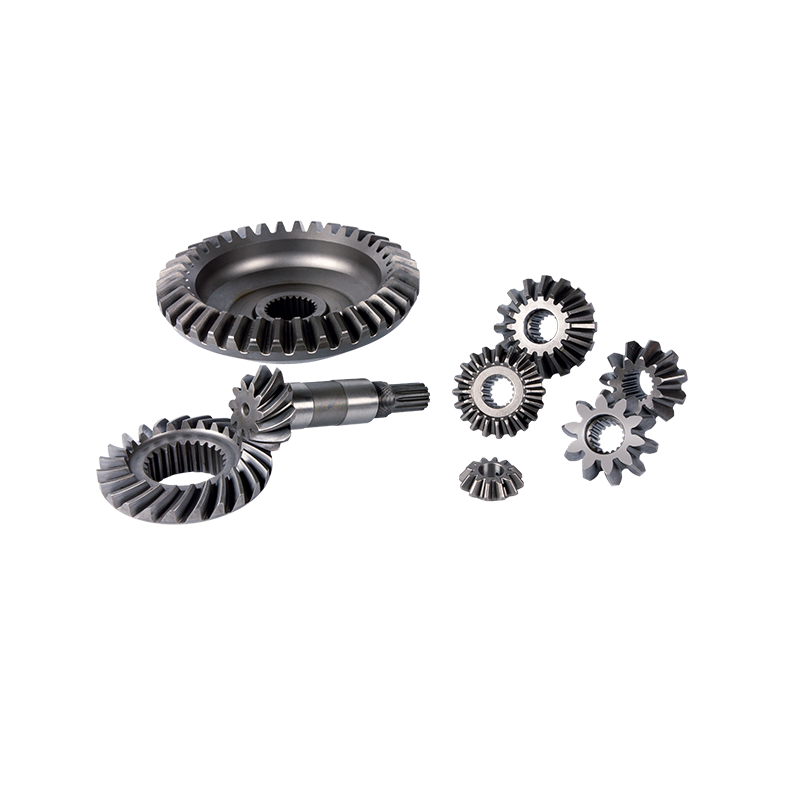
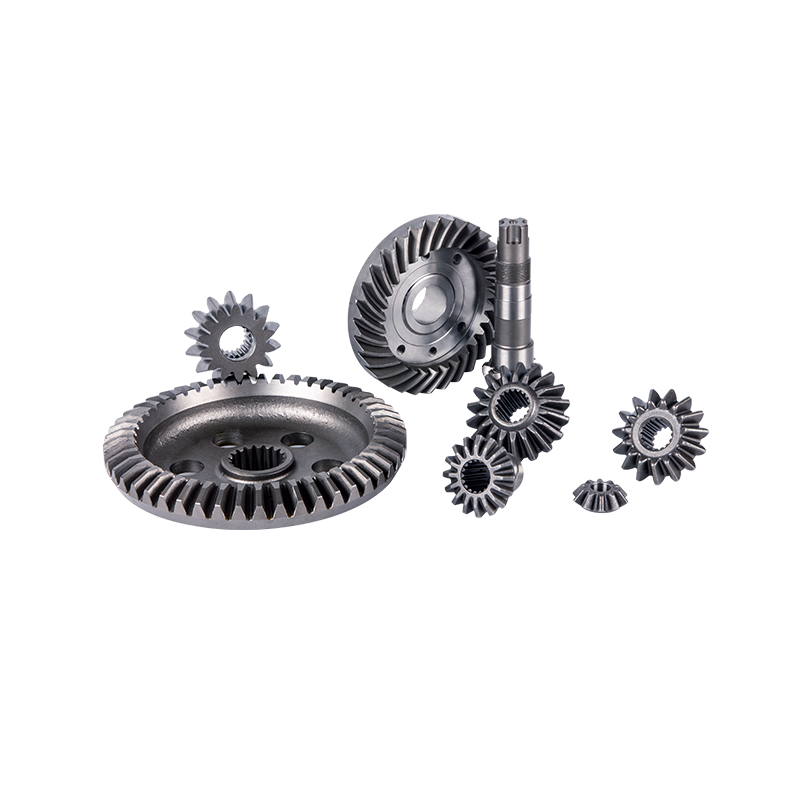
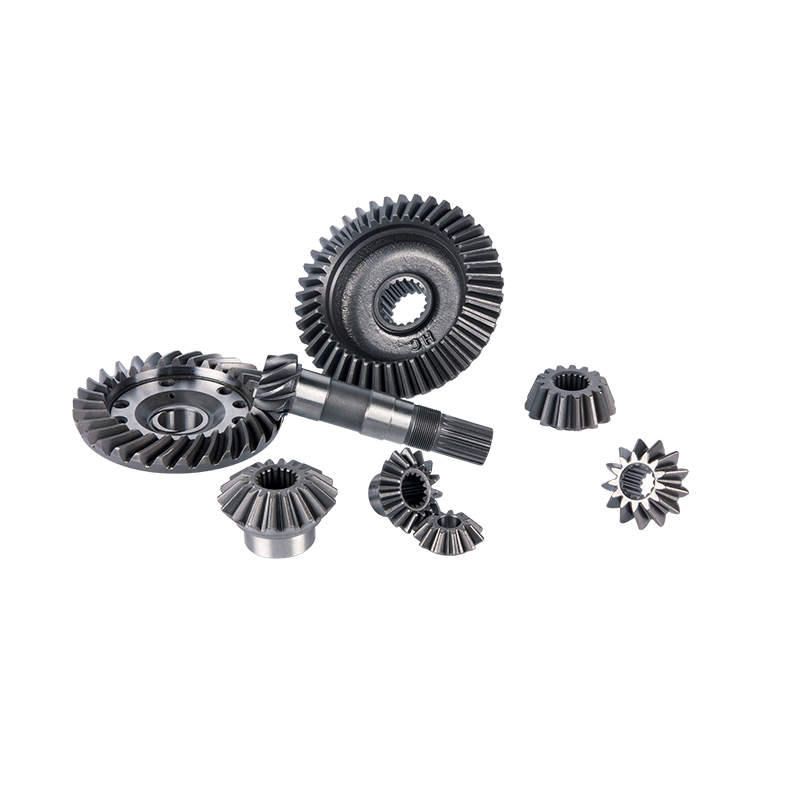
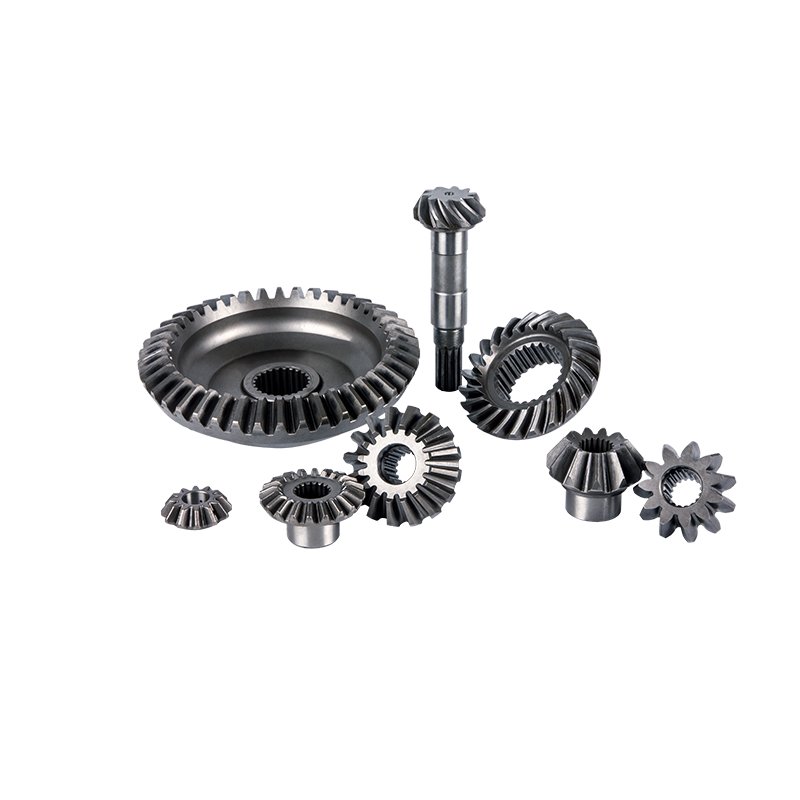
Straight Bevel Gears: Tooth lines align with the generatrix of the pitch cone; easy to manufacture but noisy.
Spiral Bevel Gears: Curved tooth lines; smooth transmission with high load capacity.
Zero-Degree Bevel Gears: Spiral angle of zero degrees; combine features of straight and spiral bevel gears.
Crossed-Axis Gears:
Worm Gears: Axes are crossed (usually perpendicular); high reduction ratio but low efficiency; used in speed reducers.
Hypoid Gears: Use a conical surface as the indexing surface to approximate the end section of a hyperboloid; used in automotive drive axles.
2. Classification by Tooth Profile
Involute Gears: Tooth profiles are involute curves; easy to machine and provide smooth transmission; most widely used.
Cycloidal Gears: Tooth profiles are cycloidal curves; used in precision mechanisms like clocks.
Circular Arc Gears: Tooth profiles are circular arcs; high load capacity but noisy; suitable for heavy-duty transmission.
This translation maintains technical accuracy while ensuring clarity for readers familiar with gear manufacturing and mechanical engineering terminology. Let me know if you need further refinements!