
Here is the English translation of the detailed explanation on gear transmission characteristics and classifications:
I. Key Characteristics of Gear Transmission
High Transmission Efficiency
Minimal friction loss during gear meshing, with efficiency exceeding 98% (slightly lower for spur gears, higher for helical gears). Ideal for long-distance or high-power applications.
Precise Transmission Ratio
The gear tooth ratio determines the transmission ratio, enabling constant-speed ratio transmission. Suitable for synchronized or precision-controlled systems (e.g., machine tools, clocks).
Compact Structure
High torque-to-volume ratio, saving space and enabling high-density power transmission (e.g., automotive transmissions).
Reliable Operation and Long Lifespan
Advanced materials (e.g., alloy steel, hardened alloys) and heat treatments (e.g., quenching, carburizing) enhance wear resistance and fatigue life, lasting decades under proper maintenance.
Strong Adaptability
Transmits motion between parallel, intersecting, or skew axes (achieved via different gear types). Withstands high speeds, heavy loads, and extreme temperatures.
High Manufacturing and Installation Requirements
Requires precision machining (e.g., grinding, hobbing) and strict alignment. Misalignment causes noise, vibration, and premature failure.
High Cost
Higher material, machining, and heat treatment costs than belt or chain drives, but lower long-term maintenance expenses.
II. Classification of Gear Transmission
1. By Relative Position of Gear Axes
Parallel-Axis Gear Transmission
Spur Cylindrical Gears: Simple structure, easy manufacturing, but high impact/noise during meshing. Used in low-speed, light-load applications (e.g., fans, toys).
Helical Cylindrical Gears: Smooth meshing, low noise, high load capacity, but axial thrust requires bearing support. Common in high-speed, heavy-duty systems (e.g., automotive transmissions).
Double-Helical (Herringbone) Gears: Symmetrical left/right helical teeth eliminate axial thrust. Used in high-power drives (e.g., rolling mills).
Intersecting-Axis Gear Transmission
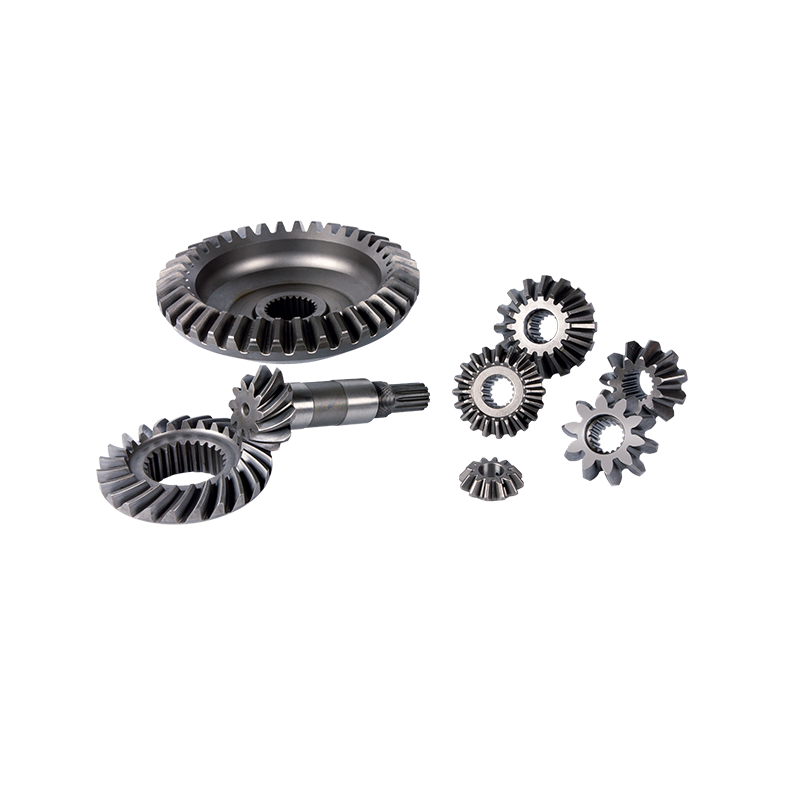
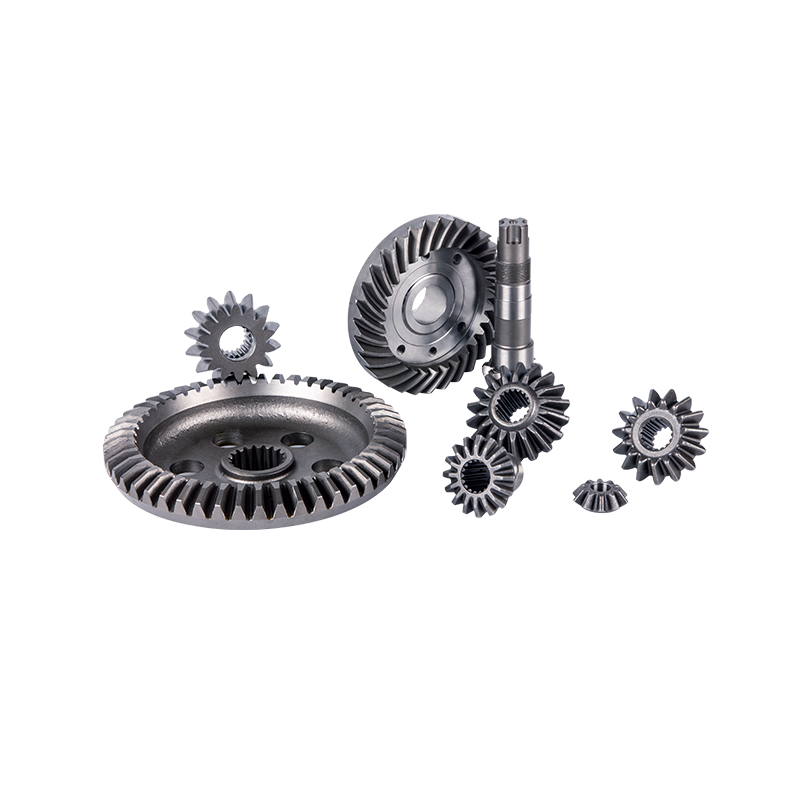
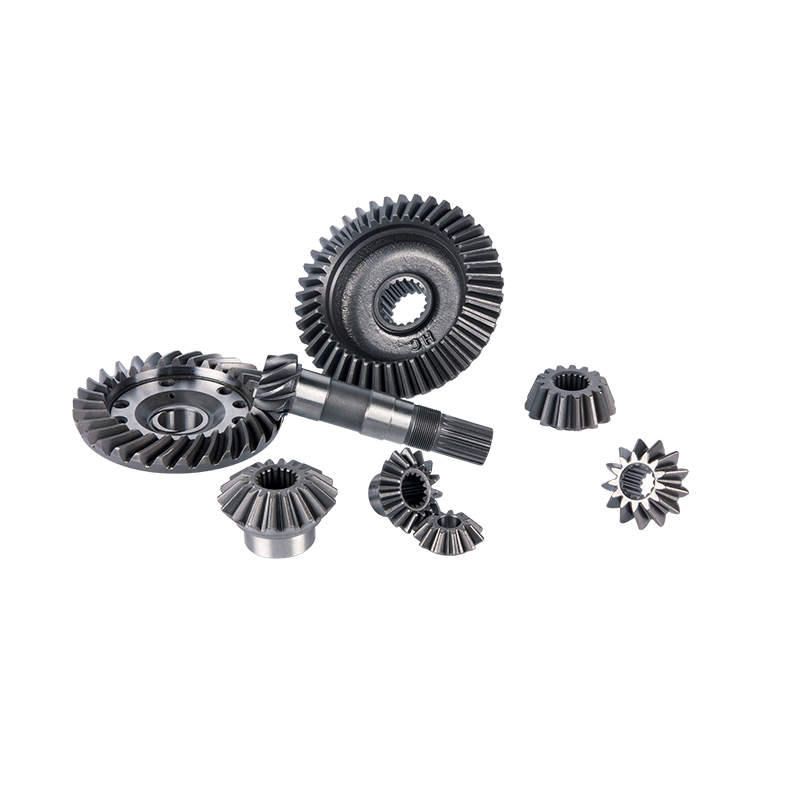
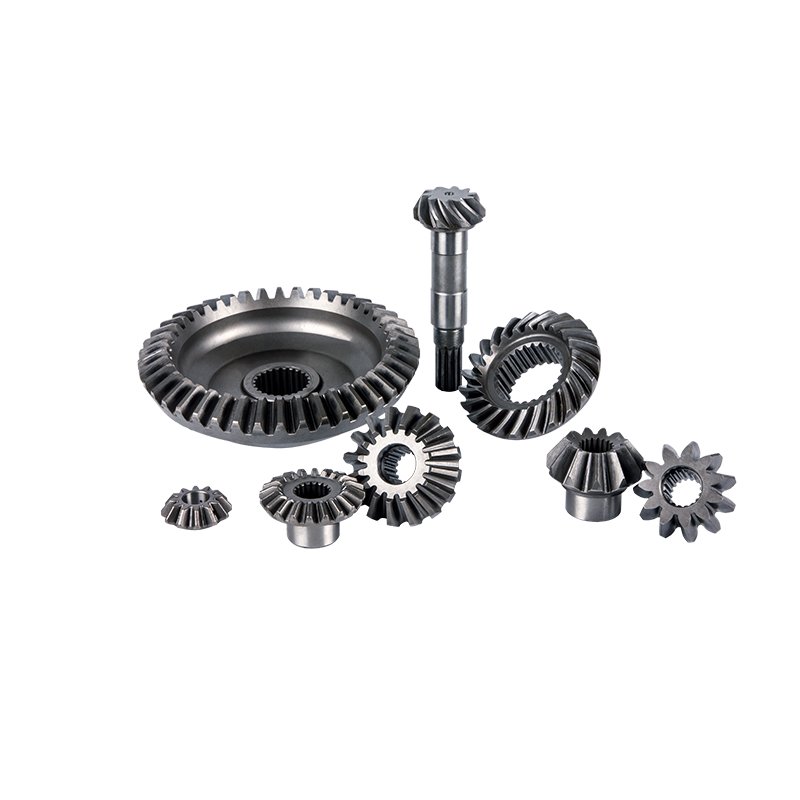
Straight Bevel Gears: For intersecting axes, but high meshing impact/noise. Largely replaced by spiral bevel gears.
Spiral Bevel Gears: Smooth meshing, high load capacity. Used in automotive differentials and machine tool spindles.
Skew-Axis Gear Transmission
Worm Gear Drives: Achieve large reduction ratios (typically i > 5) with compact structure, but low efficiency (~60–70%) and self-locking capability. Common in reducers, elevators, and hoists.
Skew-Axis Helical Gears: Use helical angles for skew-axis transmission, higher efficiency than worm gears but complex design.
2. By Tooth Profile Curve
Involute Gears: Most widely used due to excellent meshing performance and ease of manufacturing (e.g., hobbing, shaping).
Cycloidal Gears: High contact strength but complex machining. Used in precision drives (e.g., clocks, instruments).
Circular Arc Gears: High contact strength but sensitive to center distance errors. Suitable for heavy-duty drives (e.g., rolling mills).
3. By Manufacturing Process
Cast Gears: Low cost but low precision. Used in low-speed, light-load applications.
Forged Gears: High strength but low material utilization. Suitable for heavy-duty gears.
Cut Gears: High precision via hobbing, shaping, or grinding. Dominant in industrial applications.
Powder Metallurgy Gears: Formed by powder compaction, ideal for mass-produced small-module gears (e.g., toys, office equipment).
4. By Surface Hardness
Soft-Tooth Gears: Surface hardness ≤350 HBS (case-hardened or normalized). Low cost, suitable for general-purpose drives.
Hard-Tooth Gears: Surface hardness >350 HBS (quenched, carburized). High load capacity and long lifespan. Used in heavy-duty, high-speed applications.
5. By Transmission Ratio Type
Fixed-Ratio Gears: Constant transmission ratio (e.g., cylindrical/bevel gears).
Variable-Ratio Gears: Adjustable transmission ratio (e.g., non-circular gears used in textile/printing machinery).
III. Application Comparison
| Gear Type | Typical Applications | Advantages | Limitations |
|---|---|---|---|
| Spur Cylindrical Gears | Low-speed, light-load drives (fans, toys) | Simple, low cost | High noise, impact |
| Helical Cylindrical Gears | Automotive transmissions, machine spindles | Smooth operation, high load capacity | Axial thrust requires support |
| Worm Gear Drives | Reducers, elevators, hoists | Large reduction ratio, compact | Low efficiency, heat generation |
| Bevel Gears | Automotive differentials, machine spindles | Intersecting-axis transmission | Complex machining, high cost |
| Herringbone Gears | Rolling mills, marine drives | Eliminates axial thrust, high load capacity | Extremely high precision required |
IV. Summary
Gear transmission excels in efficiency, precision, and reliability but requires careful consideration of cost and manufacturing complexity. Selection depends on transmission ratio, axis alignment, load, speed, and environmental conditions. For example, automotive transmissions prioritize helical and herringbone gears, while elevators favor worm gears. Advances in materials and machining are driving trends toward higher precision, longer lifespans, and lower noise.
This translation maintains technical accuracy while ensuring clarity for an English-speaking audience in mechanical engineering or related fields. Let me know if you need further refinements!